
How Chronic Stress Affects Your Body
“Fight or flight” is our evolutionary response to danger. When we’re faced with extreme stress, our bodies flood with adrenaline and cortisol. These stress hormones elevate our heart rate and blood pressure, and they suppress our digestive and immune systems. Our bodies do this because they are preparing us to either fight with the danger or run away from it.
The issue is that when you are living in a near-constant state of stress or anxiety, this fight or flight doesn’t switch back to a state of rest. Those surges of adrenaline and cortisol become constant, and they can have negative consequences on your physical health as a result.
As a result of chronic stress, many people may find it more difficult to take care of themselves. Necessities like meals, sleep, and movement take a backseat when you’re not feeling well, but when these things are disrupted, they begin to affect your mental and physical health as well.
Physical Signs and Symptoms of Chronic Stress
Before we dive into how chronic stress can affect your physical health, it’s important to note that not everyone will experience the symptoms below. Even if you do experience the symptoms below, they may not be stress-related. That’s where the confusion comes in!
Regardless of why you’re experiencing one of the symptoms below, it’s important to get evaluated by your primary care provider to determine the root cause. You should always take your symptoms seriously and find doctors who take them seriously, too. If it ends up being stress-related, the symptoms you’re experiencing are still real and valid – they’re not “all in your head”; they’re signaling an excess amount of tension and anxiety in your body.
- Acne: Higher levels of stress are associated with increased acne breakouts. Many studies have confirmed these findings, including one that measured increased acne during stressful university exam periods, and another that found worse acne in stressed teens, particularly for boys.
- Pain Intolerance + Chronic Pain: Pain is a common complaint among people who have high stress levels. Pain and stress have a negative cyclical relationship; chronic stress and anxiety can serve as a predictor for pain, and those who are in pain tend to have higher levels of stress hormones.
- Weakened Immune System: Higher stress levels are associated with weakened immune systems, slower wound healing, and increased susceptibility to illness.
- Headaches & Migraines: Stress is the most common trigger for headaches and migraines, and stress intensity is associated with an increased number of headache days per month.
- Appetite Changes + Weight Gain/Loss: Stress can impact appetite and food intake, leading to undereating or overeating. Overeating is more common, with highly palatable foods (i.e., high fat, high sugar) are what people typically reach for when they’re feeling stressed. For others, stress causes nausea and appetite loss, leading to undereating.
- Digestive Issues: Our gut and our brain are closely connected, and as a result, stress can lead to digestive issues like constipation, heartburn, and diarrhea, as well as digestive disorders like irritable bowel syndrome (IBS).
How to Reduce Chronic Stress: Daily, Short-Term, and Long-Term Strategies
As someone living with chronic stress, it can certainly be stressful (ironically) to hear about the ways your body may experience stress. It’s also easy to feel like it’s “your fault” that you are having these symptoms, or that there’s no way to reduce the level of stress you’re living with. However, that’s not the case! Some of us live with a naturally higher level of anxiety, whether because we live with an anxiety disorder, or because we live in a stressful environment.
When it comes to reducing stress, there’s no one thing that will make it better. Stress comes from many directions, and so do the solutions. Much of our stress can be reduced by making sure we’re not neglecting our necessities, building coping skills, and seeking professional support as needed – which can be sorted by daily, short-term, and long-term stress management.
1. Daily Stress Management: Don’t Neglect the Necessities
The necessities we’re talking about are nutrition, sleep, movement, and socializing. Though we have many other needs, these are the ones that contribute the most to our stress levels. Here’s how each need impacts mental health, and how to make sure you’re taking care of it!
- Nutrition: Poor nutrition directly impacts mental health by promoting brain inflammation and impairing neurotransmitter function, which can increase risks of depression and anxiety. A diet high in processed foods, sugar, and unhealthy fats damages brain structure, while nutrient deficiencies hinder brain function and mood stability. However, eating nutritiously is a lot easier said than done. It can take extensive planning and preparation that not everyone has time for, and an understanding of the fuel our body needs to thrive. There are some ways to make this easier, such as:
- Meal planning and prepping, using a guide like this one.
- Focus on general healthy eating tips, rather than following a specific diet.
- Use websites like Budget Bytes to find nutritious meals on a budget.
- Sleep: Over one in three U.S. adults and eight in ten teens don’t get enough sleep. People who have chronic issues with sleep, known as insomnia, are 10x more likely to have depression and 17x more likely to have anxiety. On the other hand, psychiatric disorders like depression and anxiety can cause sleep problems. These issues can begin a vicious cycle where mental health problems lead to poor sleep, and poor sleep influences mental health. Here are some things you can do to get better sleep:
- Practice good sleep hygiene.
- Keep bedtimes and wake times consistent.
- Aim for 7 – 9 hours of sleep every night.
- Avoid caffeine after lunch.
- Movement: Sedentary time (i.e., waking time spent sitting or not moving) increases the risk of anxiety, depression, and lowers levels of emotional well-being. Incorporating movement into your routine, regardless of length, has been shown to improve mental well-being. One study found that decreasing daily sedentary time by just one hour can prevent or significantly mitigate its effects on your mental health. Here are some ways you can build movement into your routine:
- Break exercise into smaller pieces. You don’t have to do a full hour workout, you can do twenty minutes here and there!
- Pick a reward you enjoy afterwards.
- Schedule it like it’s an appointment.
- Get a workout buddy or join a walk, hike, or run club to make it social.
- Think outside the gym! Roller blading, horseback riding, rock climbing, hiking, dancing, and frisbee are all forms of exercise.
- Socializing: More than 80% of the population reports feeling some level of loneliness. 50% of those who say they always feel lonely live with clinical depression, compared to 10% of those who report never feeling lonely. Spending time with friends and family lowers these levels of loneliness, which boosts your mood and mental health in turn. Here are some tips to make more time with loved ones:
- Be proactive in scheduling things! Don’t wait until the last minute or keep your plans too flexible. Put it on the calendar and keep it there.
- Plan specific activities. Instead of vague “let’s hang out” plans, suggest things like hiking, bowling, or visiting a local museum.
- Create recurring events for your friends or family, like trivia, games, brunch, or double dates.
2. Short-Term Stress Management: Build Coping Mechanisms
When we’re feeling incredibly stressed, it’s hard to remember what we can do to help ourselves feel better. For people with chronic stress, it can feel like you need to be using coping skills 24/7 – but that’s not true! Taking care of your needs is the first step to reducing that innate level of stress. Coping skills are for when that stress is spiking. Here are some common types of coping mechanisms and examples:
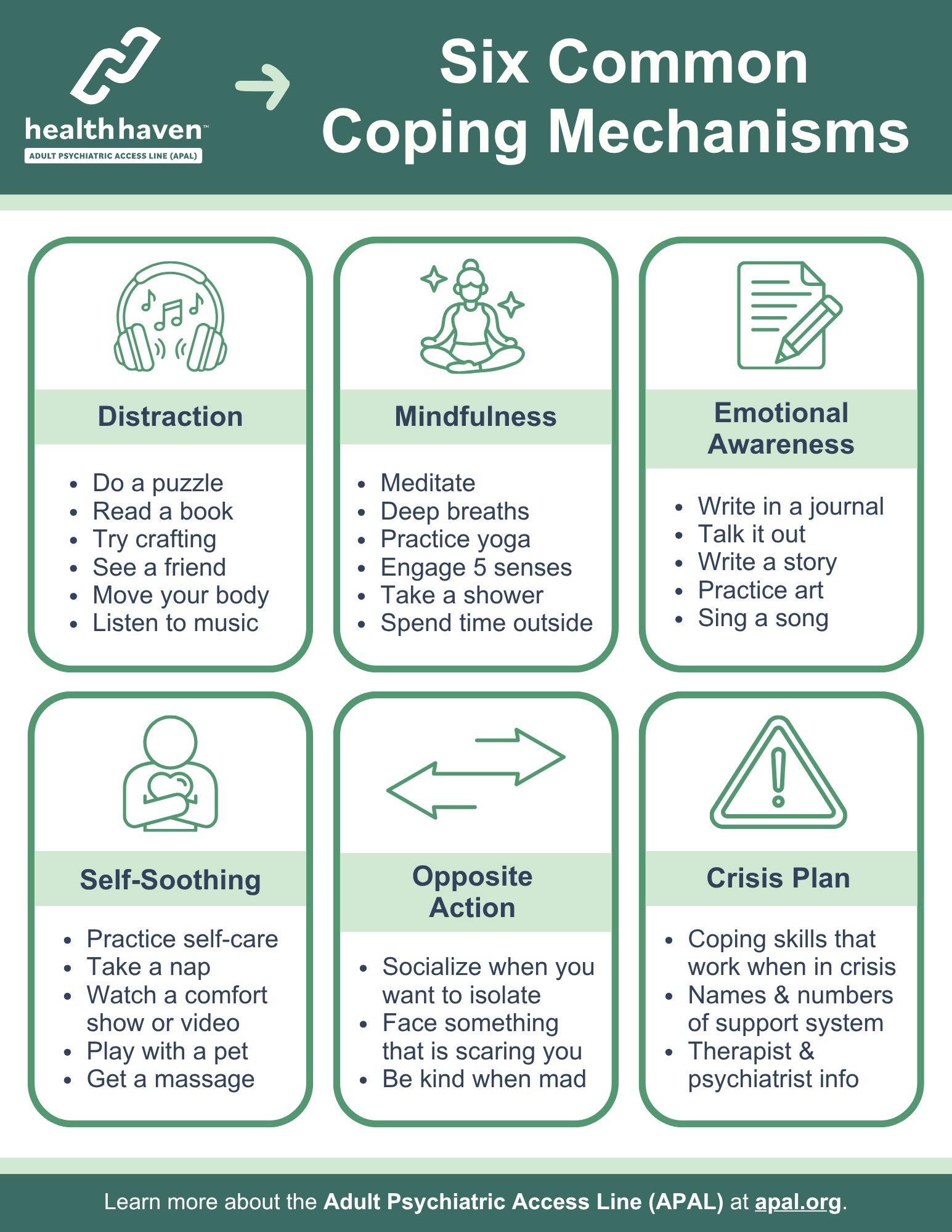
Distraction
- Do a puzzle
- Read a book
- Try crafting
- See a friend
- Move your body
- Listen to music
Mindfulness
- Meditate
- Deep breaths
- Practice yoga
- Engage 5 senses
- Take a shower
- Spend time outside
Emotional Awareness
- Write in a journal
- Talk it out
- Write a story
- Practice art
- Sing a song
Self-Soothing
- Practice self-care
- Take a nap
- Watch a comfort show or video
- Play with a pet
- Get a massage
Opposite Action
- Socialize when you want to isolate
- Face something that is scaring you
- Be kind when you’re mad
Crisis Plan
- Coping skills that work in a crisis
- Names & numbers of support system
- Therapist & psychiatrist info
3. Long-Term Stress Management: Seek Professional Support
75-80% of people who receive therapy experience some benefit to their mental health, with most patients showing significant improvement within the first 8 – 10 sessions. Therapy is a long-term strategy to manage your stress; it involves building a relationship with your therapist (which accounts for 30% of treatment outcomes), going to your sessions consistently, and actively participating in the therapeutic process. It’s something that takes time to work, and you have to put work into it. For people with chronic stress, it’s absolutely worth considering.
We know this was a lot to read through, and to someone with chronic stress, this might seem… stressful. Let’s break it back down into the highlights!
- Chronic stress can manifest as physical symptoms. It’s worth getting them checked out, and even if it ends up being stress-related, that doesn’t make your symptoms less real or valid.
- There are three ways to work on reducing your chronic stress; daily, short-term, and long-term management.
- Daily management = take care of your needs! Prioritize nutrition, sleep, movement, and socializing.
- Short-term management = use coping mechanisms! Find the ones that work for you and put them on repeat when stress spikes.
- Long-term management = seek professional support from a therapist that you get along with.
If you are looking for more professional support and aren’t sure where to turn, your primary care provider is a great place to start. They can call the Adult Psychiatric Access Line (APAL) to discuss your needs and get a care navigator to work with you on finding the mental health resources you need.